 Help us to search for Dianella tenuissima!
In the spring of 2026, we at Blue Mountains Wildplant Rescue are doing something a bit new and different. We are asking our members and friends to help us to find, and to document, a very special and little known plant that is living in our midst - Dianella tenuissima.
This little plant is very clever at keeping a low profile. Because it flowers only for a very short time, the best time to look for it is in the first two to three weeks of October.
Download our Dianella tenuissima ID Guide in PDF format here
BACKGROUND
Dianella tenuissima is a little-known species which was first described in 2006, specimens having been found in Wentworth Falls and the Newnes Plateau. As a relatively new species, it is not listed in the standard field guides, and plant ID apps (such as iNaturalist) don’t have enough data to help identify it. As of early 2025, there were less than 30 records for the species in the Atlas of Living Australia, with records in Capertee, Mount Wilson, Mount Tomah, and the Grand Canyon area of Blackheath, on top of the original locations. Interestingly, in recent years they have also been sighted much further afield: around Mount Kembla, further south on the Illawarra escarpment overlooking Jamberoo, and near Fitzroy Falls in the southern highlands.
In the spring of 2025 there was a spate of new identifications: plants were found in the Gordon Creek area of Leura, in and around Banksia Park in South Katoomba, the Megalong Valley edge at Ngula Bulgarabang, and the Kanimbla Valley edge on the western side of Blackheath. Although there are so few records, Dianella tenuissima is not listed as a threatened species. It is classified as “data deficient” under IUCN Red List criteria. We want to overcome this deficiency.
 It now appears that Dianella tenuissima is more widespread than previously thought, and may not be at all uncommon. In spring 2026, Wildplant Rescue hopes to mobilise the community to go out and look for this under-recorded plant, and to log its locations. The aim is firstly to raise community awareness of this special little plant in our midst, secondly to build a more accurate picture of its distribution and habitats, and thirdly to build up a bigger database of photographs and habitat information so that apps such as iNaturalist can accurately identify it.
There are lots of places for us to look!
Are they found further north than Capertee? Further west than Lidsdale? Further east than Wentworth Falls? Further south than Fitzroy Falls? And what about the big gap between the Blue Mountains and the South Coast and Southern Highlands? We need to be looking far and wide.
DESCRIPTION
- Doesn’t look anything like a Dianella!
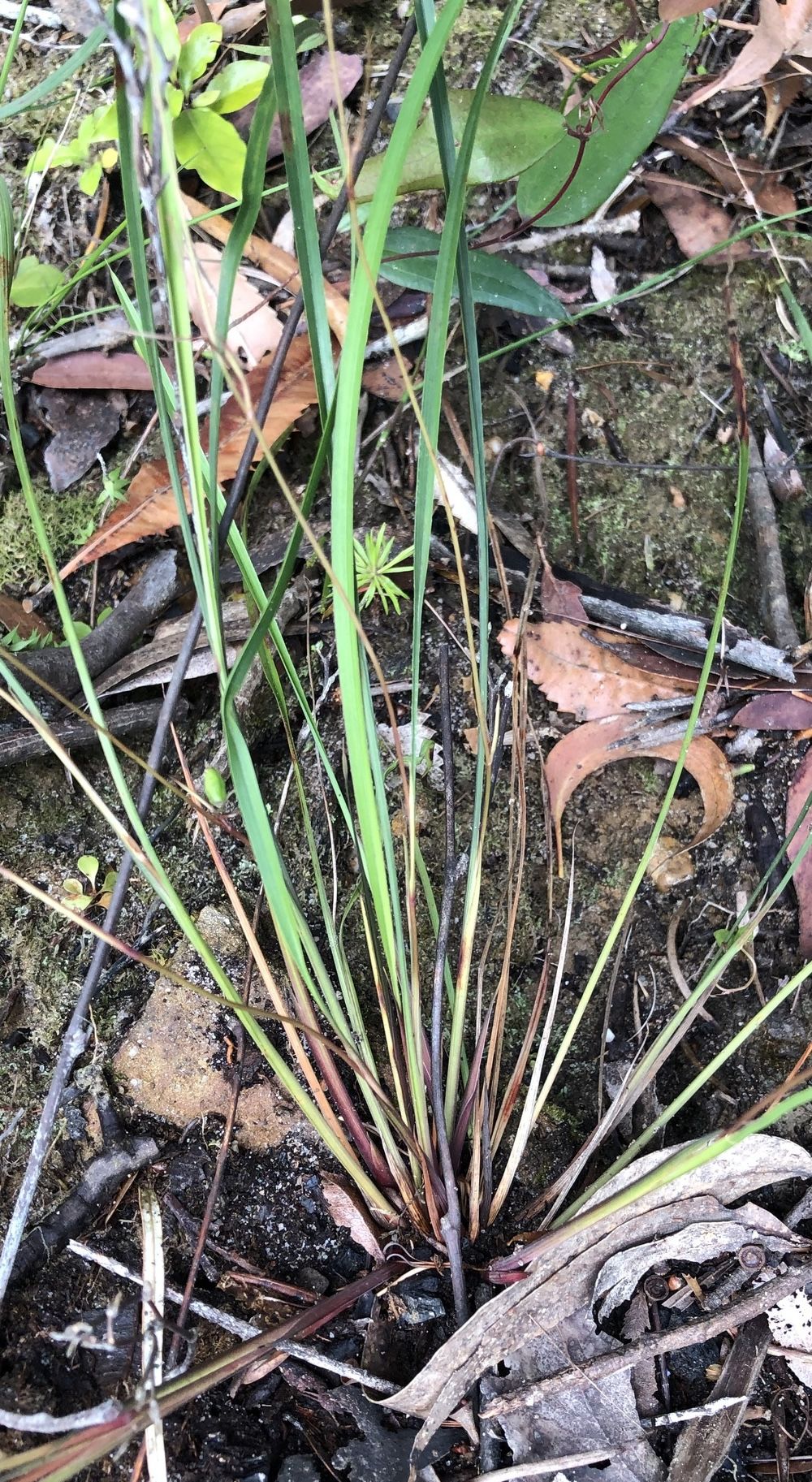
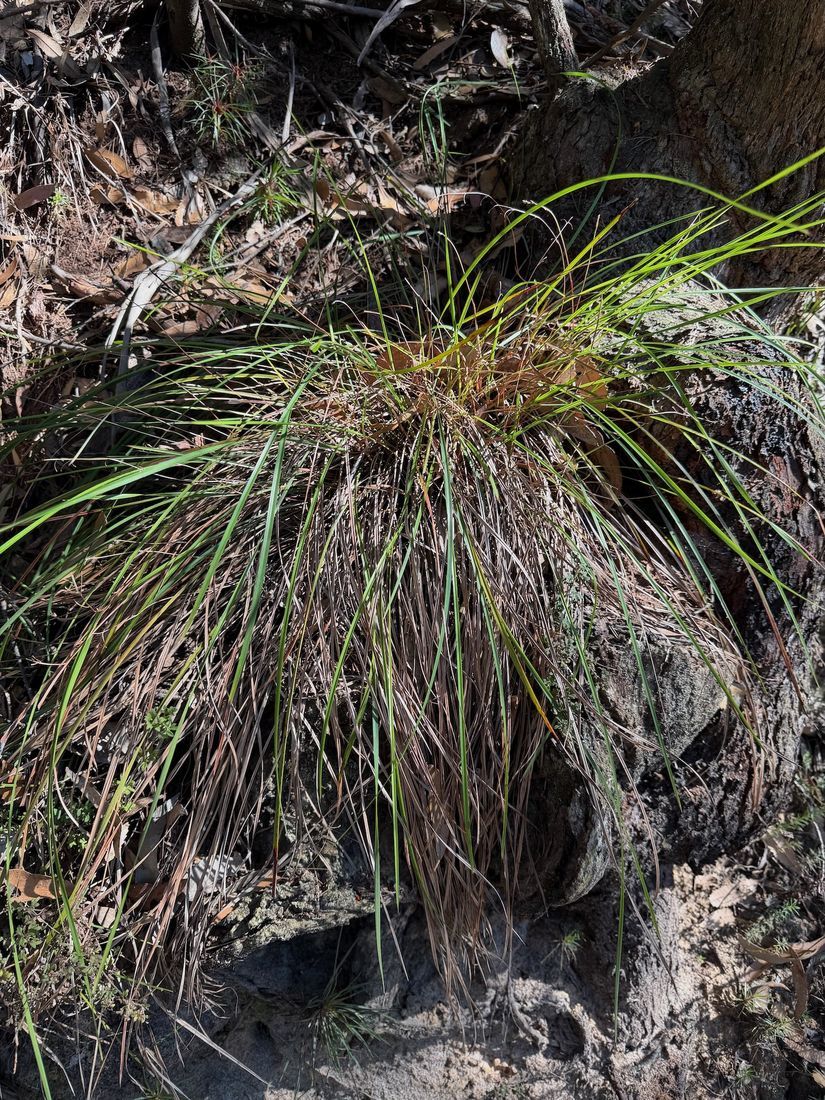
- Tufted grass-like herb to 0.5m high, bases dull red or reddish purple.
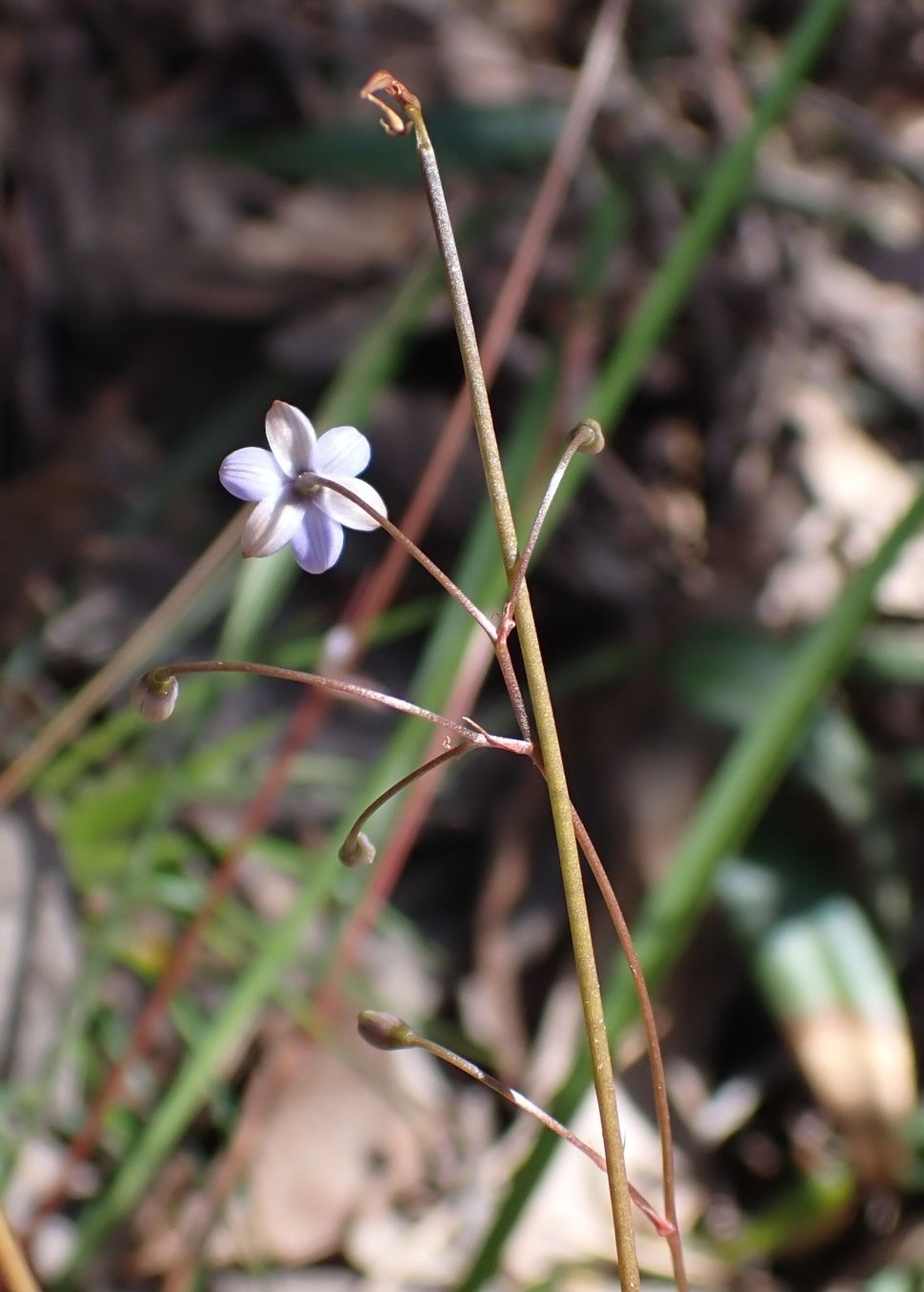
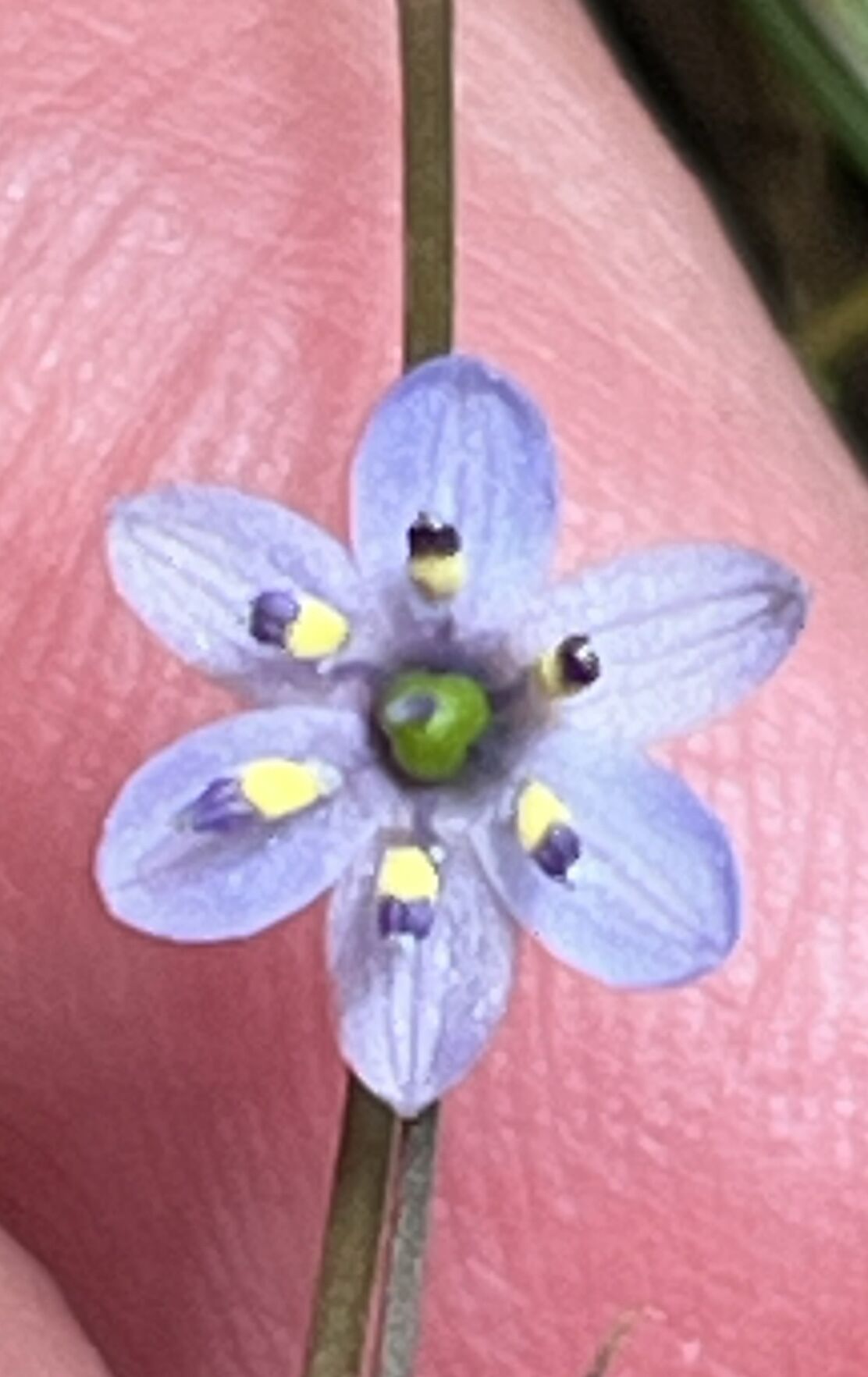
- Inflorescence with 3-10 tiny pale violet flowers, lemon-yellow stamens, deep violet anthers, green in the middle (the “ovary”). The illustration shows the flower size relative to a finger.
- Flowers very briefly around the first half of October. Flowers are only present for two or three weeks, often shorter than that.
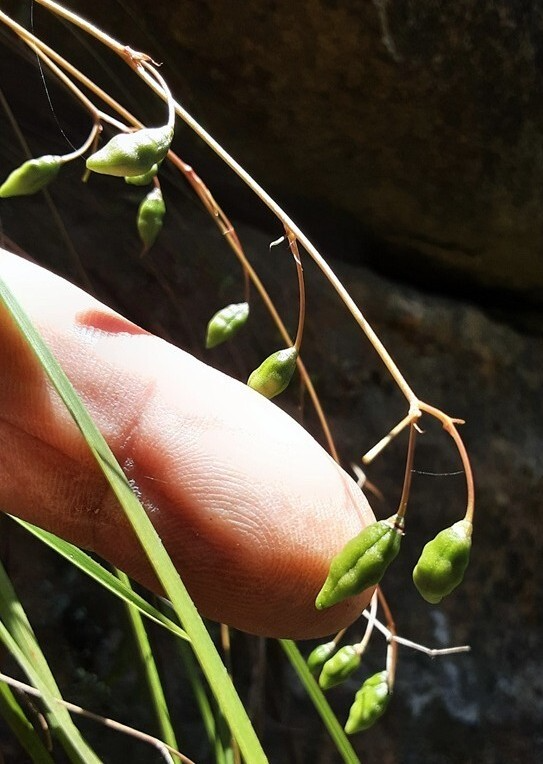
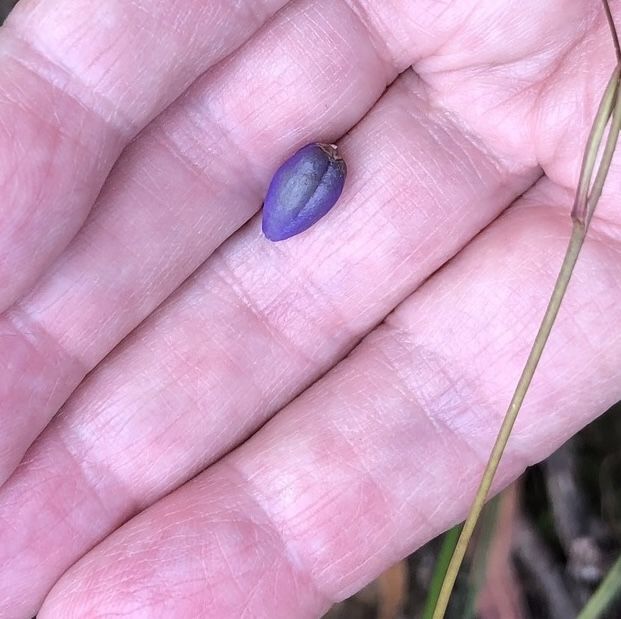
- The immature berry is green, maturing to an irridescent violet, 5-10mm long, 3-7mm diameter. Berries can still be seen on the plant for two or three months, until around late December.
HABITAT
-
Often found on escarpment cliffs, in fissures in sandstone and conglomerate rocks, and in deeper soils in forests and ravines near escarpment edges.
-
Often found on track edges.
-
Generally found (so far!) at elevations above about 500 metres.
 INSTRUCTIONS & TIPS
- Download our Dianella tenuissima ID Guide via the link at the top of this page, and keep it in your phone for ready reference when you are in the bush. If you prefer, print a copy and keep it in your bag.
-
If you don’t already have it, think about downloading the iNaturalist app onto your phone - for instructions on how to do this and how to use it, go to https://help.inaturalist.org. This is a citizen science application and website which is free and easy to use, and will enable us to track your findings.
-
Although it is easily overlooked and misidentified, this plant is actually very easy to identify if you find a flowering specimen. The flower is quite unique, and - with the information on this sheet - if you find it you will know it’s right!
-
Because the flowers are so tiny, it can be difficult to take good photos. Do your best to take photos of the flower, berries, and the overall form of the plant.
-
Make a note of the habitat where you find the plant, e.g. escarpment edge, east facing cliff, forest floor etc.
-
Upload photos and any notes to iNaturalist. Once confirmed, your observation will go onto the Atlas of Living Australia, becoming a part of the scientific record. If you don’t wish to grapple with the technology, please email your photos and info about your find to us at news@wildplantrescue.org.au, and we will upload it for you.
[Photos from iNaturalist by Helen Yoxall, Chris Jonkers, Tessa Barratt, Michael Alexander]
FOR MORE INFORMATION
Atlas of Living Australia (more photos, and map of existing distribution record)
iNaturalist
PlantNet
https://plantnet.rbgsyd.nsw.gov.au
THANK YOU for participating in this project. Updates will be posted on this page, and in our monthly e-newsletter.